Project Overview
UConnect 5 is Stellantis’ next-generation in-vehicle infotainment system, designed for use across multiple Stellantis brands, including Maserati, Jeep, Fiat, and others.
As part of the Harman UX/UI design team, I collaborated with designers, engineers, and vendors to deliver brand-specific themes, multilingual experiences, and production-ready visual assets for a vast ecosystem of screen sizes and vehicle categories.
The Challenge
Stellantis needed a unified infotainment platform that could scale across:
- Multiple brands with distinct identities
- Dozens of vehicle models
- Different screen shapes and sizes
- Global markets requiring multilingual support
The system had to be visually cohesive, brand-authentic, and technically implementable across varied hardware environments.
Core Challenges Included:
- Creating unique themes for luxury, performance, and mainstream brands
- Ensuring visual quality across large, ultra-wide, and small displays
- Designing animations and icons ready for automotive-grade deployment
- Balancing artistic vision with strict hardware and performance constraints
Users & Context
UConnect 5 serves millions of drivers across diverse regions.
Primary user needs included:
- Clear visual hierarchy for glanceability while driving
- Brand expression that enhances the emotional experience of the vehicle
- Intuitive interaction for navigation, media, climate, and vehicle settings
- Legibility under a range of lighting conditions
The design system had to feel premium, responsive, and intuitive across all vehicle classes: from entry-level Fiats to high-performance Maseratis.
Design Tools
- Adobe Photoshop — High-resolution backgrounds, textures, and visual treatments
- Adobe Illustrator — Iconography and vector assets
- Adobe After Effects — Motion design for loading animations
- InVision — Interactive prototypes and cross-team reviews
Design Process
1. Brand Immersion & Requirements Gathering
Our team collaborated with Stellantis (formerly FCA) to understand the brand identities across their portfolio.
We analyzed each brand’s:
- Visual language
- Color palettes
- Material finishes
- Interior design cues
- User expectations
This research guided our approach to iconography, layouts, and animations across the system.
2. Multi-Brand Theme Development
Each vehicle line required its own distinct UI theme, while maintaining the underlying UConnect system structure.
This included:
- Color palettes
- Icon styles
- Background artwork
- Motion patterns
- Typeface integration
Because the themes would appear on multiple screen formats, we ensured that assets scaled seamlessly across:
- Portrait and landscape displays
- Large and small screens
- Instrument cluster displays
3. Asset Production & UX/UI Collaboration
As part of the design team, I partnered with other designers to create production-ready UI artifacts, including:
- Custom iconography in Illustrator
- Startup loading animations in After Effects
- Branded background images in Photoshop
I also ensured that all assets were optimized for automotive performance (e.g., file size reductions, simplified vector paths, simplified animations).
4. Multilingual Support
We collaborated with a translation vendor to support a global audience.
To ensure a seamless experience for all regions, we:
- Adjusted layouts to accommodate long language strings
- Tested alignment and truncation behaviors
- Verified legibility across character sets (Latin, Cyrillic, etc.)
- Ensured that icons conveyed meaning independent of language
5. Engineering Collaboration
Close collaboration with developers was critical to ensure feasibility.
I worked directly with engineering partners to:
- Validate that icons rendered correctly in the infotainment environment
- Confirm that animations met performance constraints
- Adjust color profiles for display accuracy
- Revise assets based on real hardware tests
This iterative process ensured the final UI maintained visual integrity across all vehicles.
Brand Examples
Maserati — High-End Luxury Theme
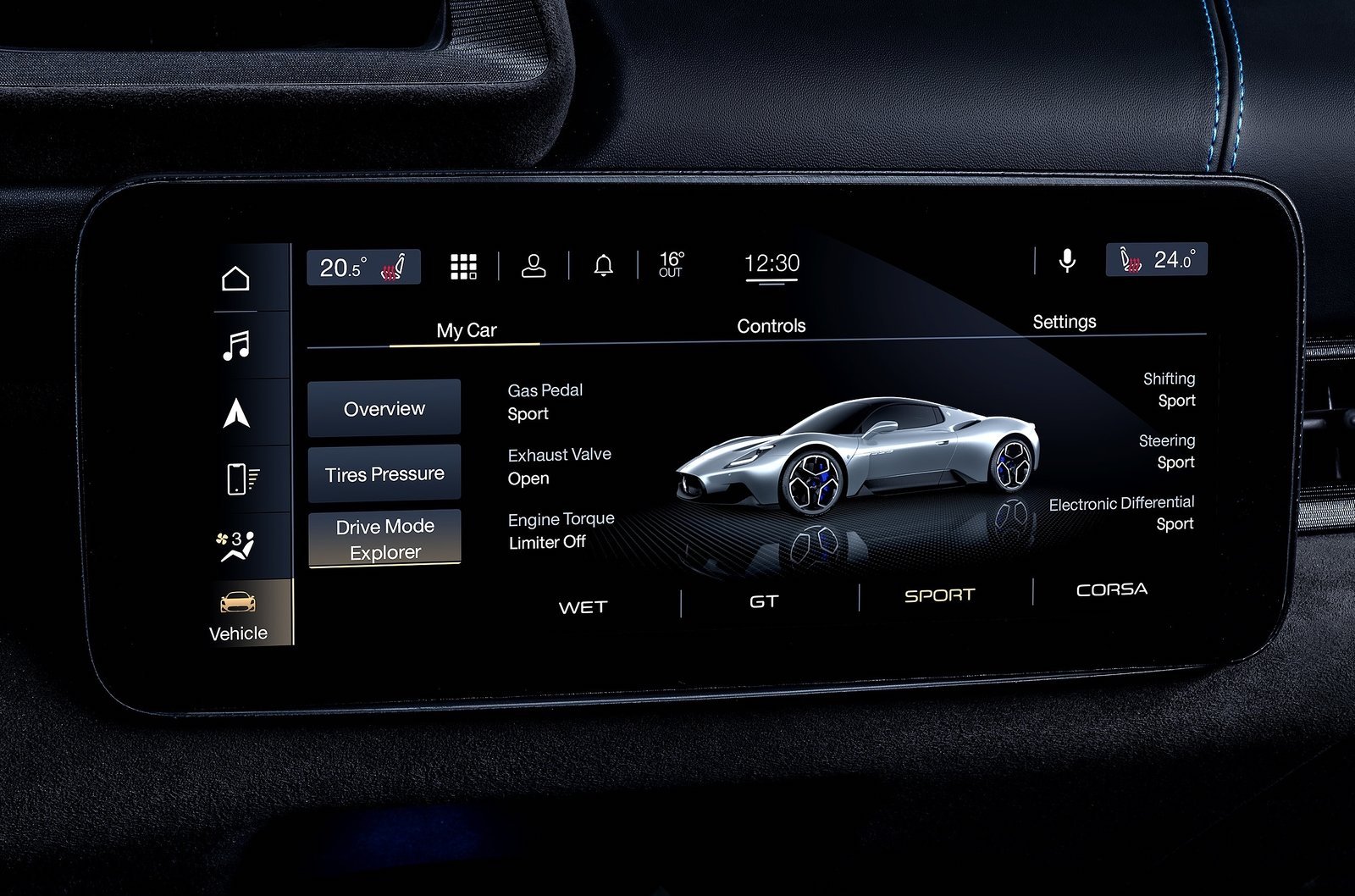
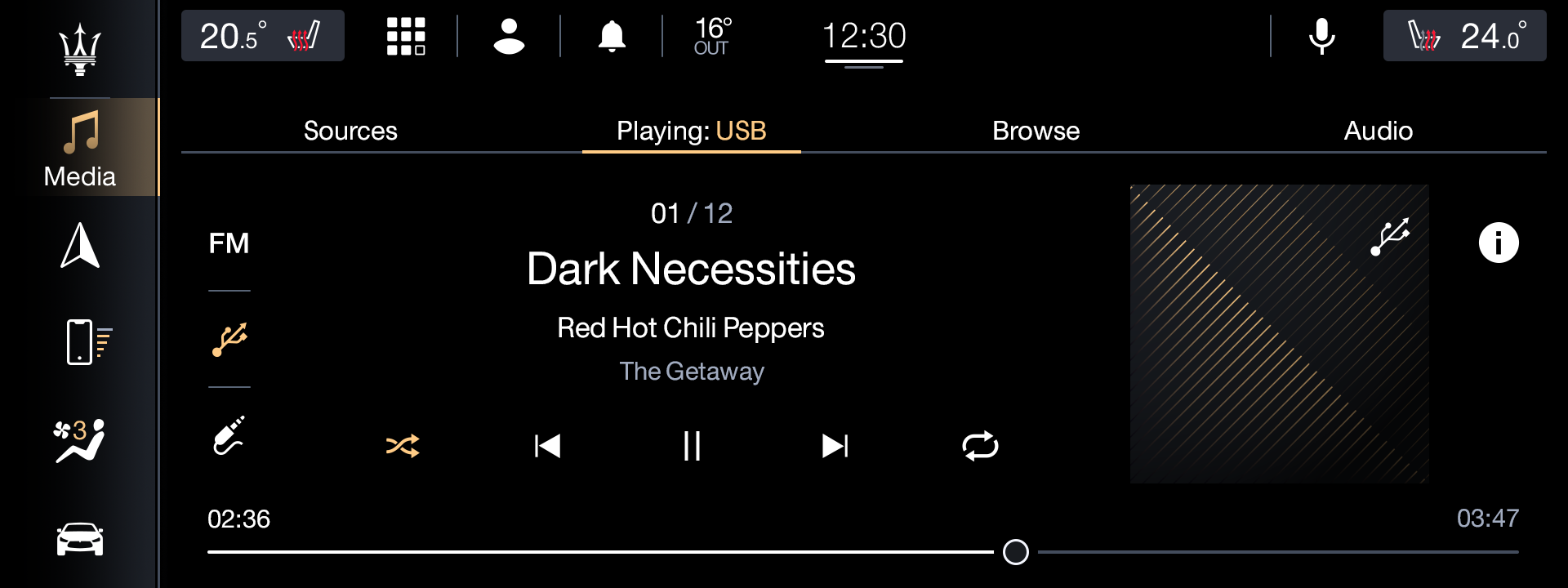
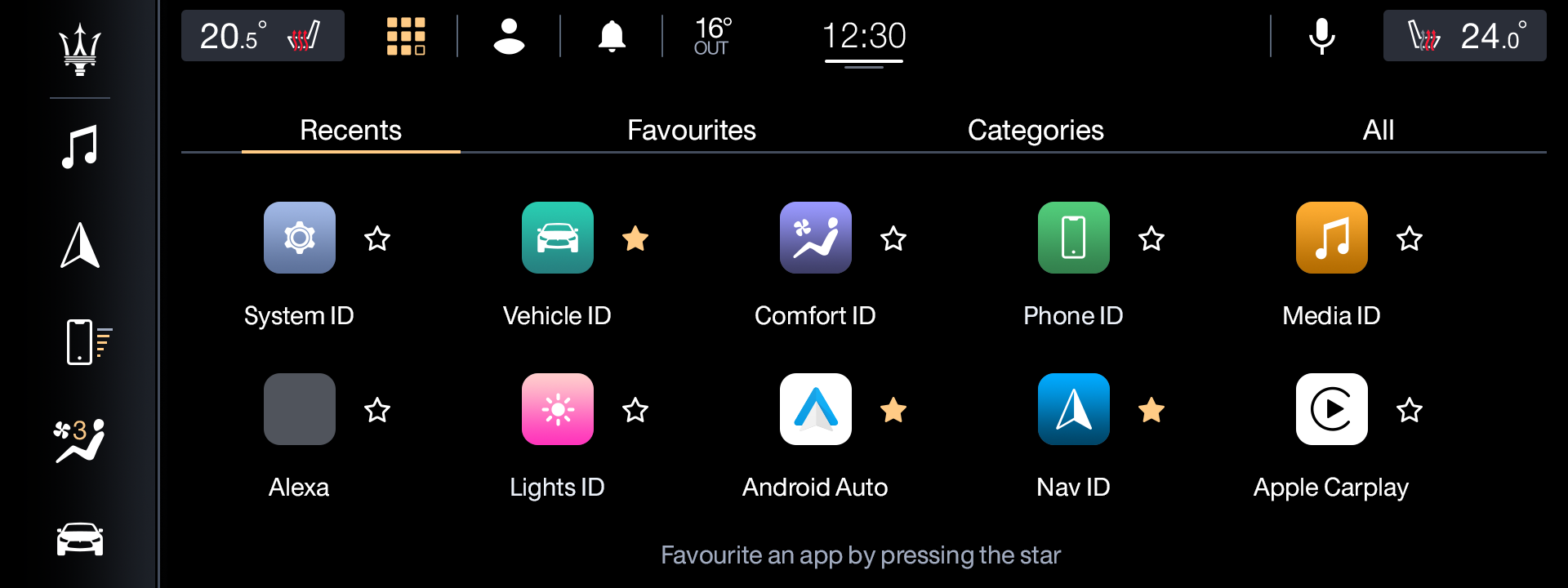
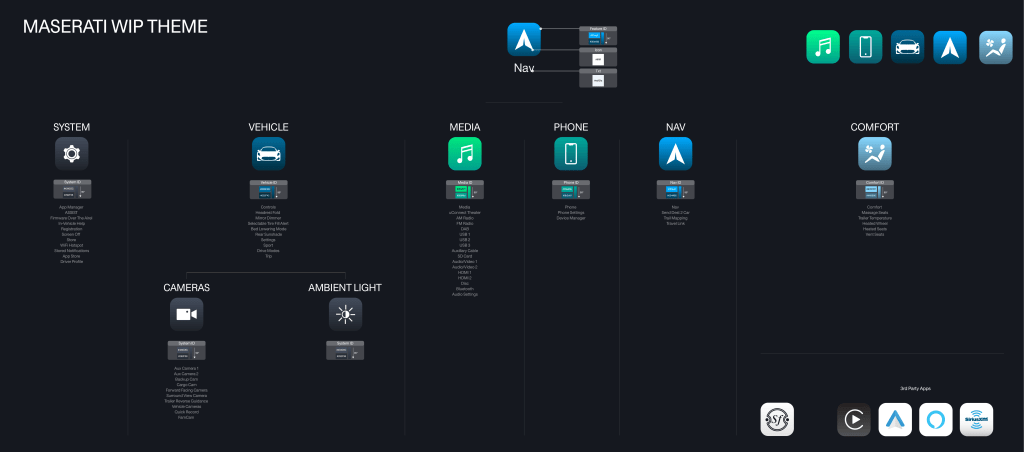
For Maserati, we developed a premium black and gold palette that aligned with the brand’s luxury positioning.
Key features included:
- Accented gold highlights
- Deep black backgrounds for contrast
- Elegant, minimalistic iconography
- A custom typeface created by a type foundry exclusively for Maserati’s infotainment system
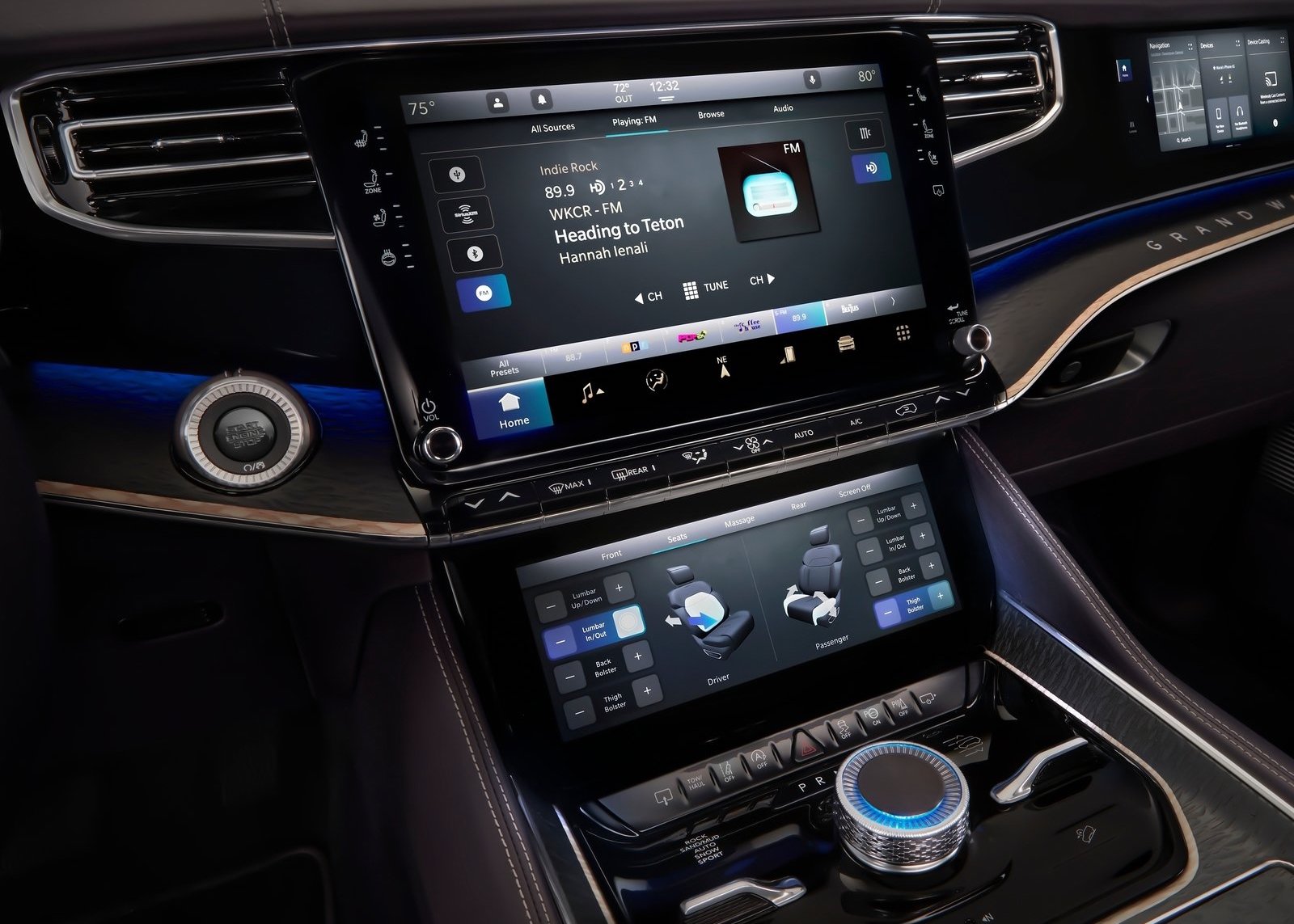
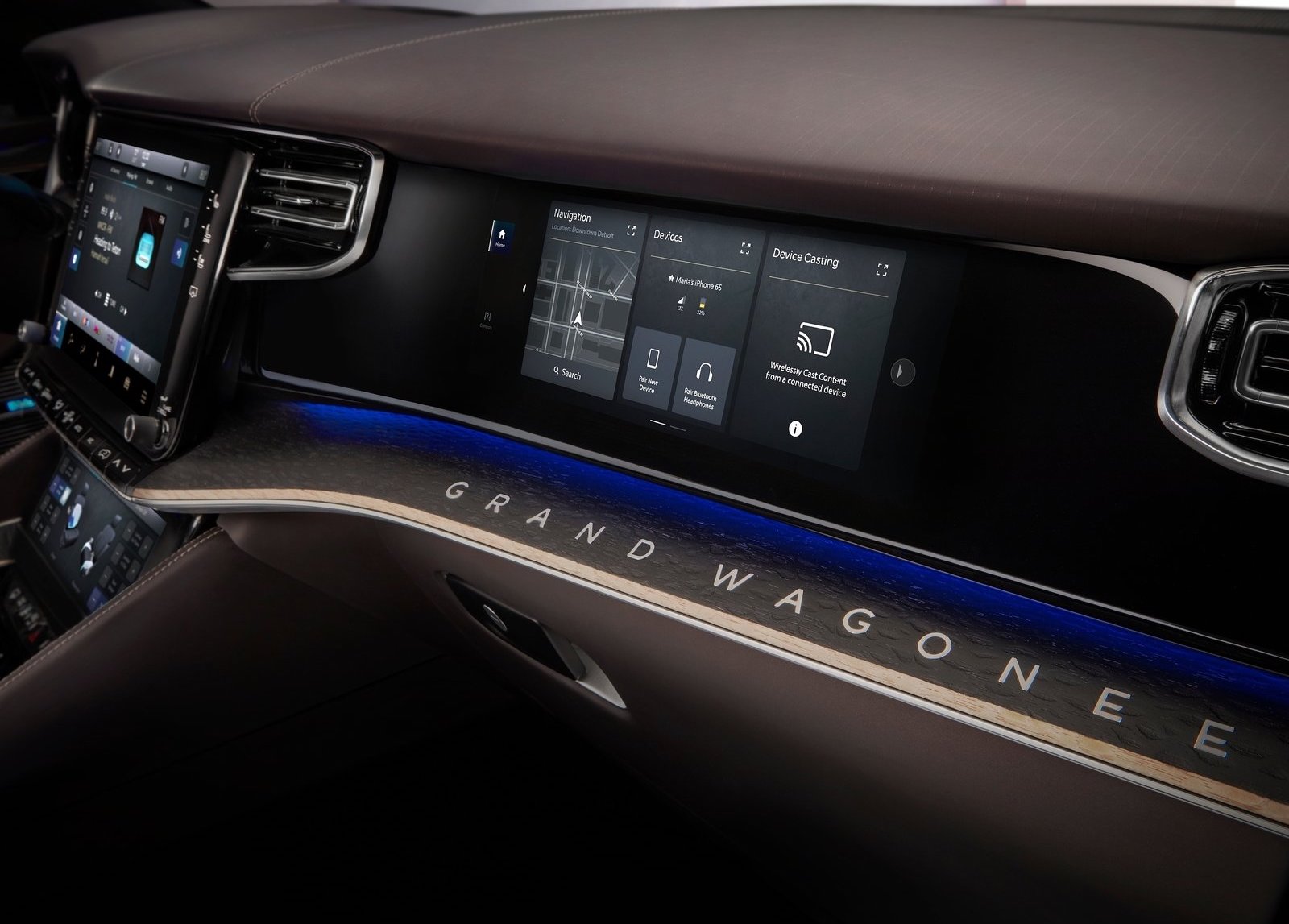
Jeep Grand Wagoneer — Passenger-Side Experience
For the Jeep Grand Wagoneer, we designed a unique UI extension for the passenger-side screen, adding a second display that allowed passengers to:
- Assist with navigation
- Manage media
- Control certain vehicle features
This required a layout system that felt cohesive with the main screen but adapted to a distinct passenger use case.
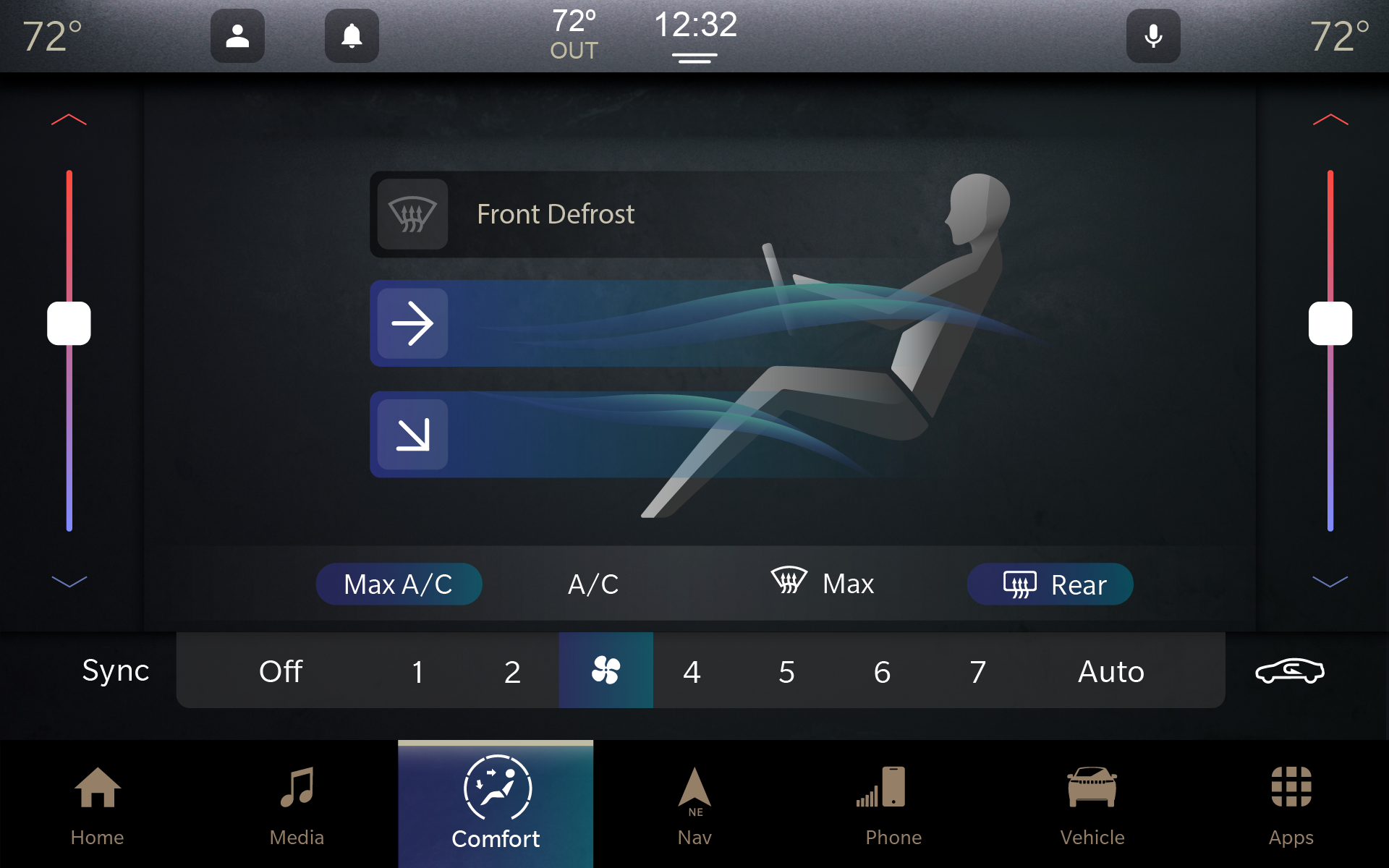
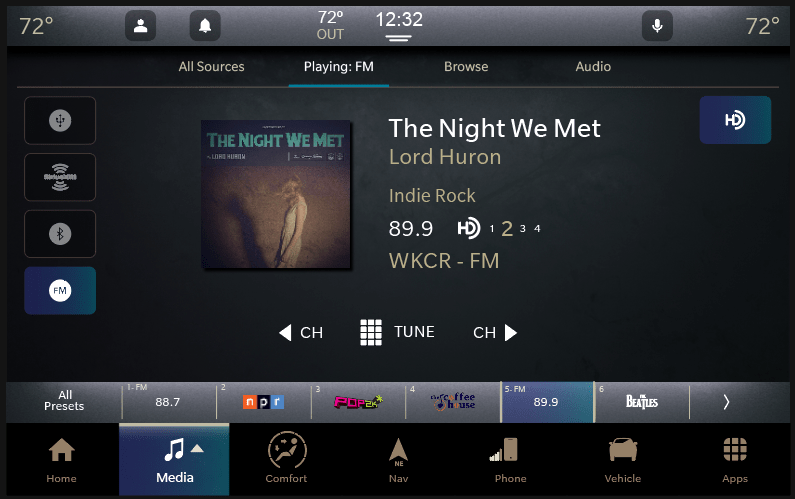
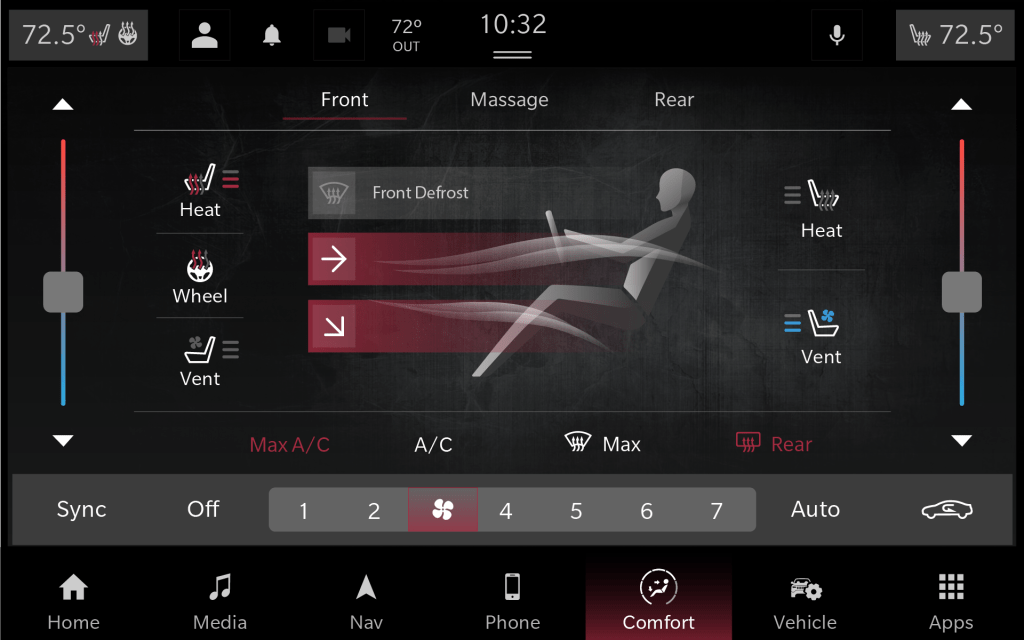
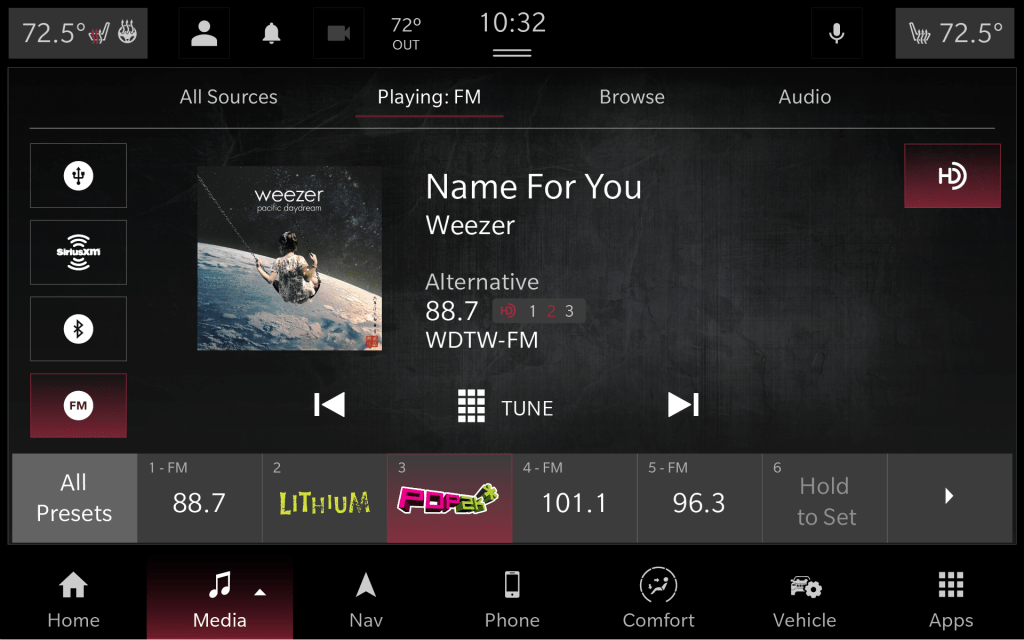
Alternate Color for Dodge Theme:
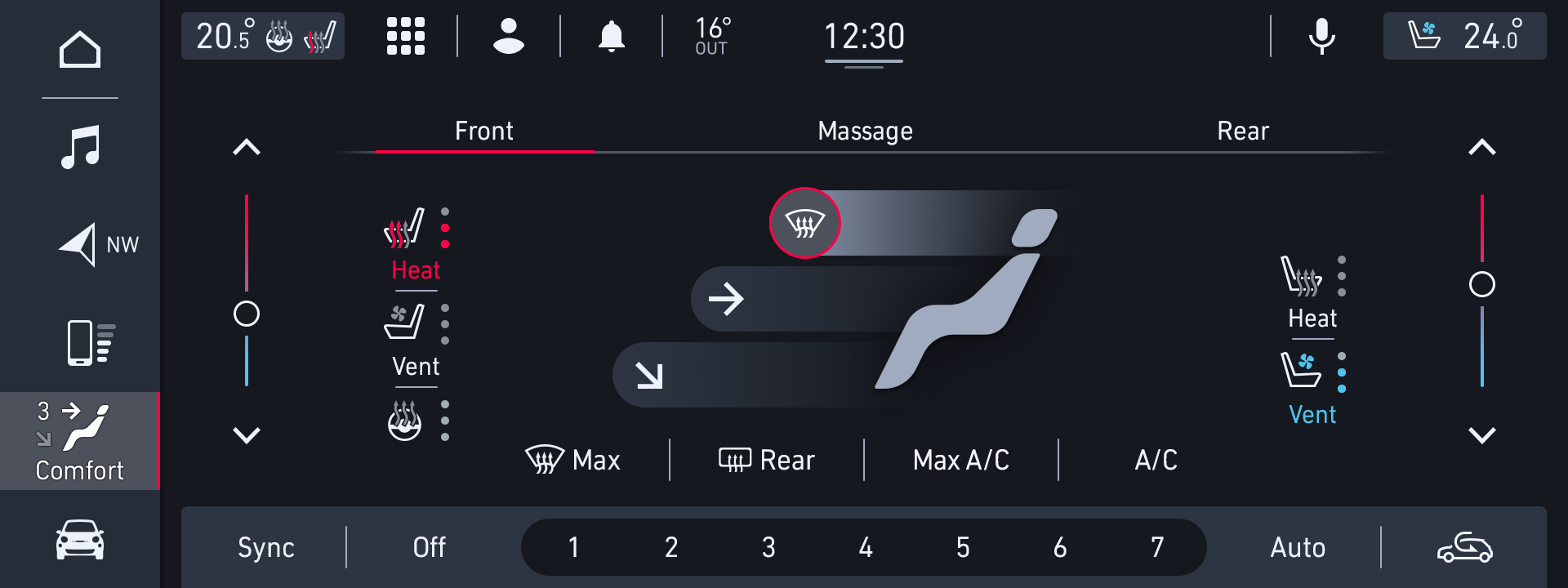
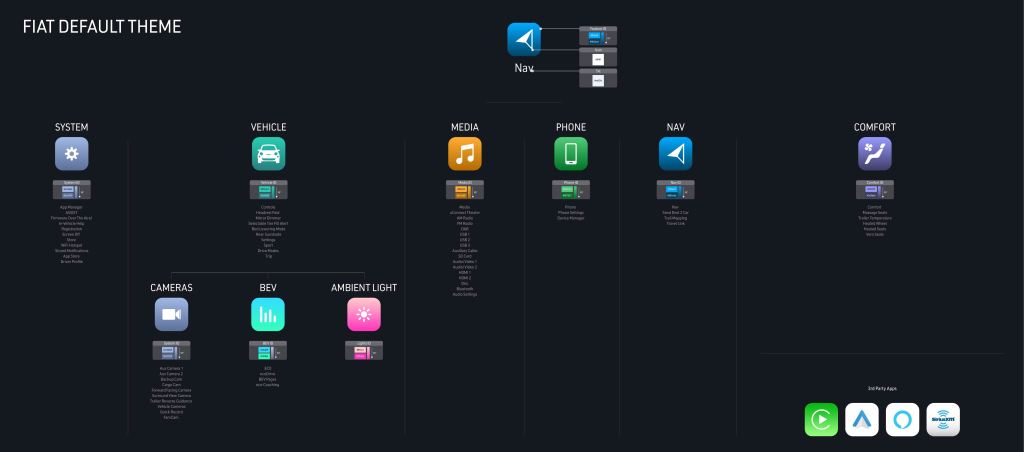
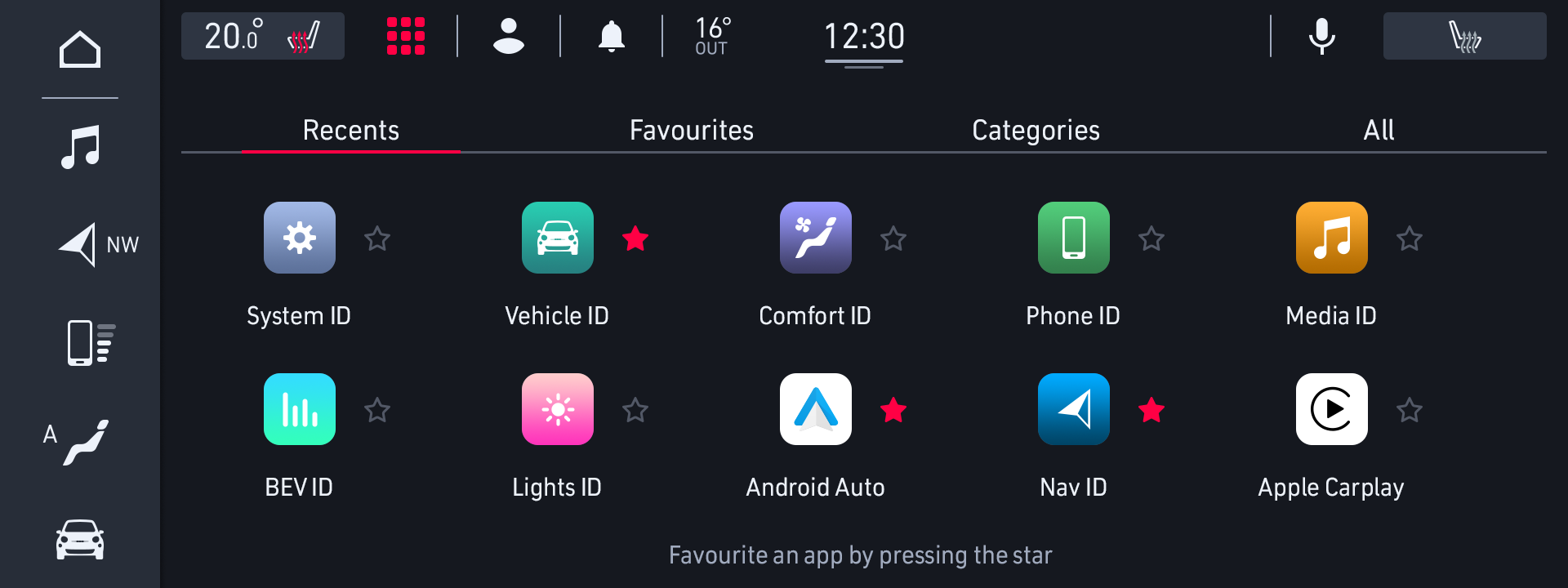
Fiat — Playful, Accessible Theme
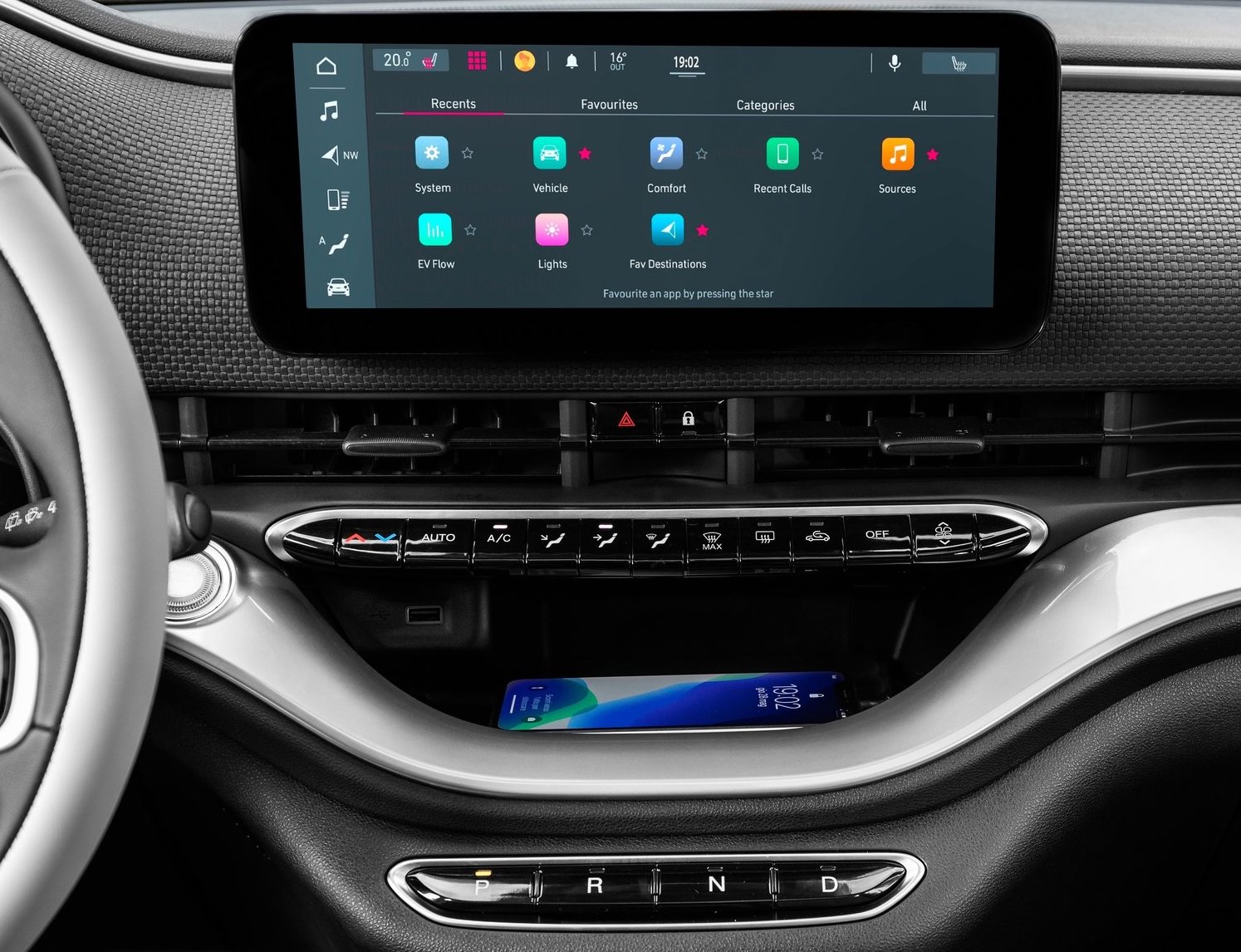
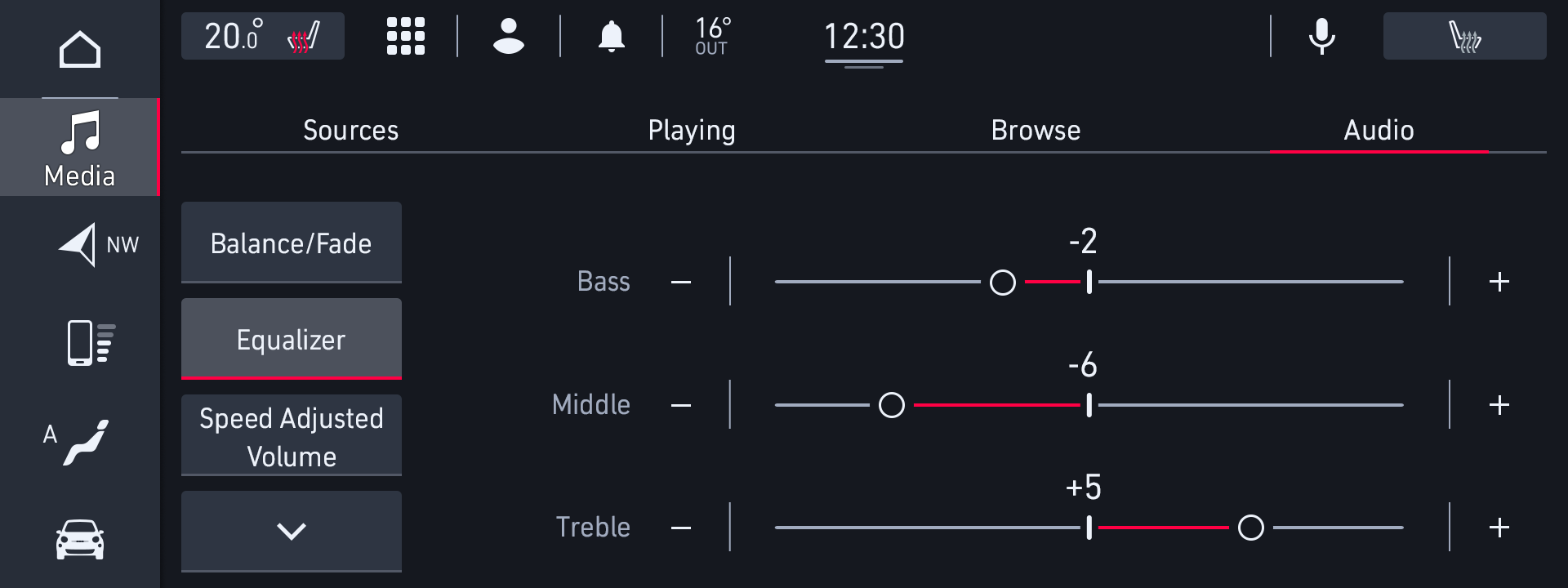
Fiat’s UI drew inspiration from the Maserati theme structure but used a distinct color palette aligned with Fiat’s bright, friendly brand personality.
We focused on:
- Lighter backgrounds
- Soft shadow treatments
- Simplified iconography for a more approachable feel
This demonstrated how a single design system could flex across very different brand identities.
Final Output
Across the UConnect 5 ecosystem, we delivered:
- Hundreds of UI assets (icons, artwork, animations)
- Brand-specific visual themes
- Responsive designs for multiple screen formats
- A cohesive motion and visual design language
- A globally localized system ready for mass production
The result was a polished, highly scalable infotainment platform that brought unique brand storytelling into every vehicle.
Outcome & Impact
- Successful rollout across Stellantis brands including Maserati, Jeep, Fiat, and more
- Fully localized global experience supporting multiple languages
- High-fidelity assets ready for automotive-grade production
- Cross-functional workflow between designers, developers, and type foundries
- A unified infotainment system capable of scaling for years of future models
Key Takeaways
- Designing for automotive requires balancing brand identity with safety, usability, and government regulations
- Collaboration between external vendors (e.g., type foundries, translators) adds richness and global usability
- Real hardware testing is essential for validating color, motion, and rendering behavior
- A modular design system ensures long-term scalability across brands and vehicles
 Tara Wilkinson UX/UI Portfolio