Project Overview
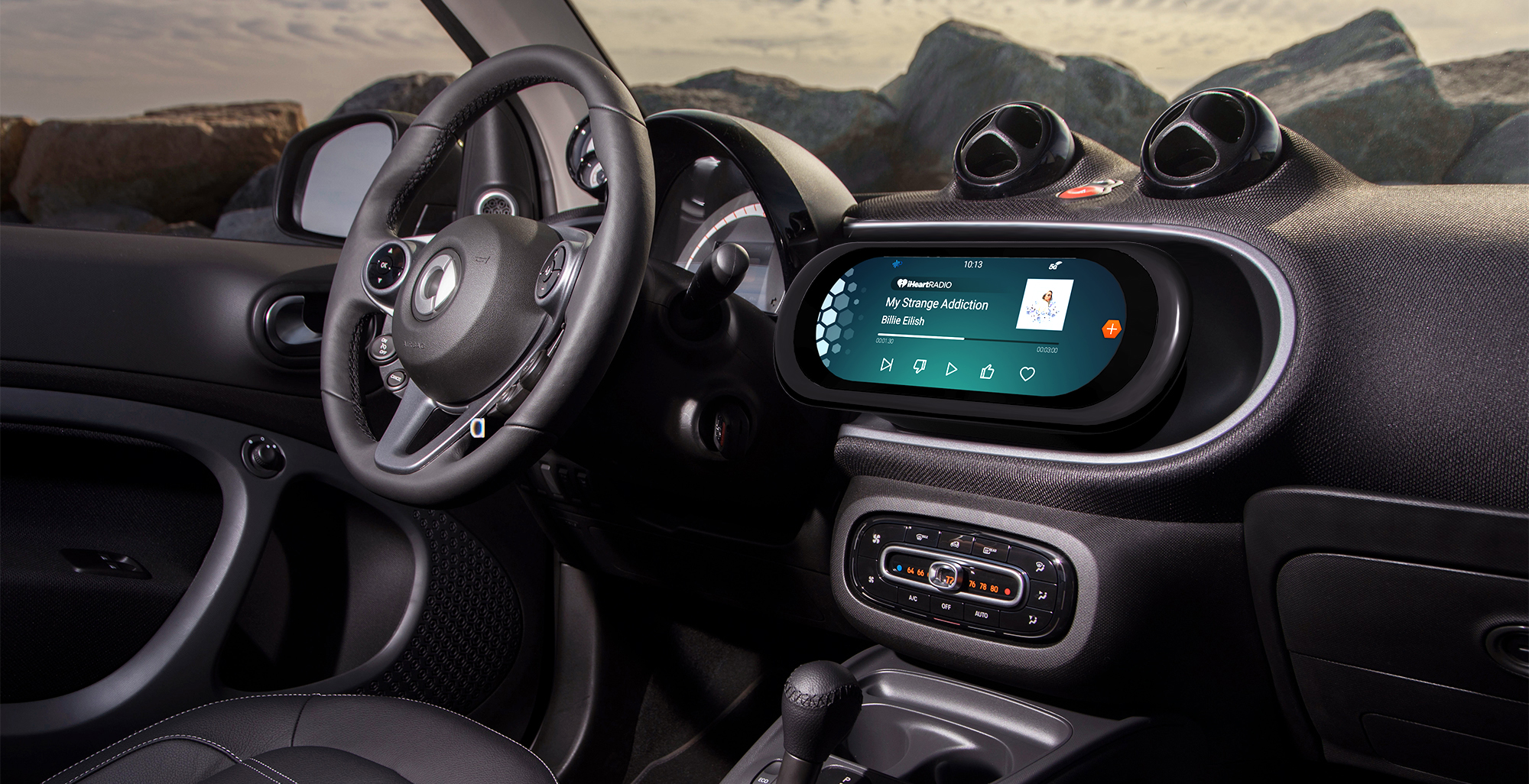
For the 2020 Consumer Electronics Show (CES), Harman and Samsung partnered to develop a conceptual infotainment system for the Smart Fortwo vehicle. The goal was to showcase an innovative infotainment system that aligned with Harman’s vision for connected mobility in small, affordable vehicles like the Smart Fortwo.
The resulting concept, VisionNext, was a fully functional prototype displayed live at CES 2020.
I contributed to the UX/UI design, branding elements, and prototyping.
The Challenge
Harman needed a high-impact, forward-looking infotainment system that would:
- Align with Harman and Samsung’s innovation goals
- Reflect the Smart Fortwo’s unique design language
- Run on a real-time prototype built under tight deadlines
- Be visually compelling on the CES show floor
This project required rapid iteration, cross-functional collaboration, and physical prototyping to create a seamless digital and hardware experience.
Design Tools & Materials
- Figma – Wireframes, interaction flows, final UI mockups
- 3D Printer – Fabrication of physical components for the prototype
- Additional materials used by the engineering team for mounting and testing
User & Context
Unlike consumer-facing infotainment design, VisionNext was created for an event environment, where it would be used by many different guests and be demoed to audiences.
The target audience included:
- CES attendees
- Automotive industry leaders
- Press and media
- Employees from Samsung, Harman, and partner companies
The design needed to be intuitive, touch-friendly, and instantly impressive – especially in a fast-moving show environment.
Research & Inspiration
Our design exploration included:
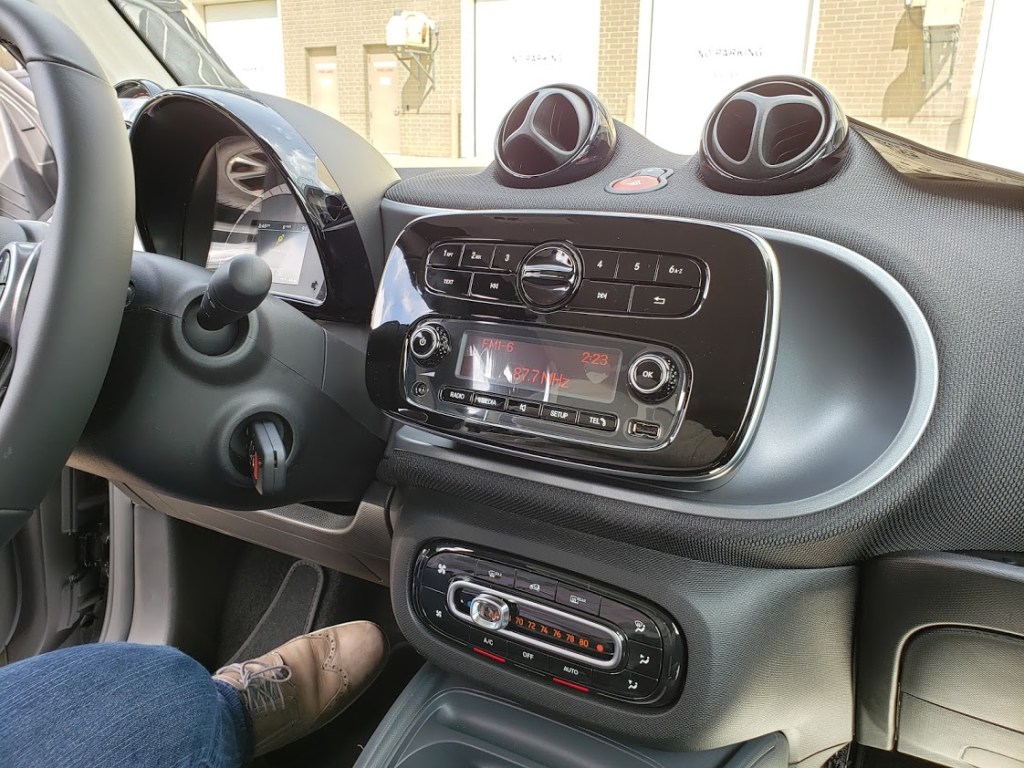
- Reviewing the original Smart Fortwo dashboard
- Studying its interior design and materials
- Analyzing user interaction patterns for small electric city cars
Design Insight: Hexagonal Form Language
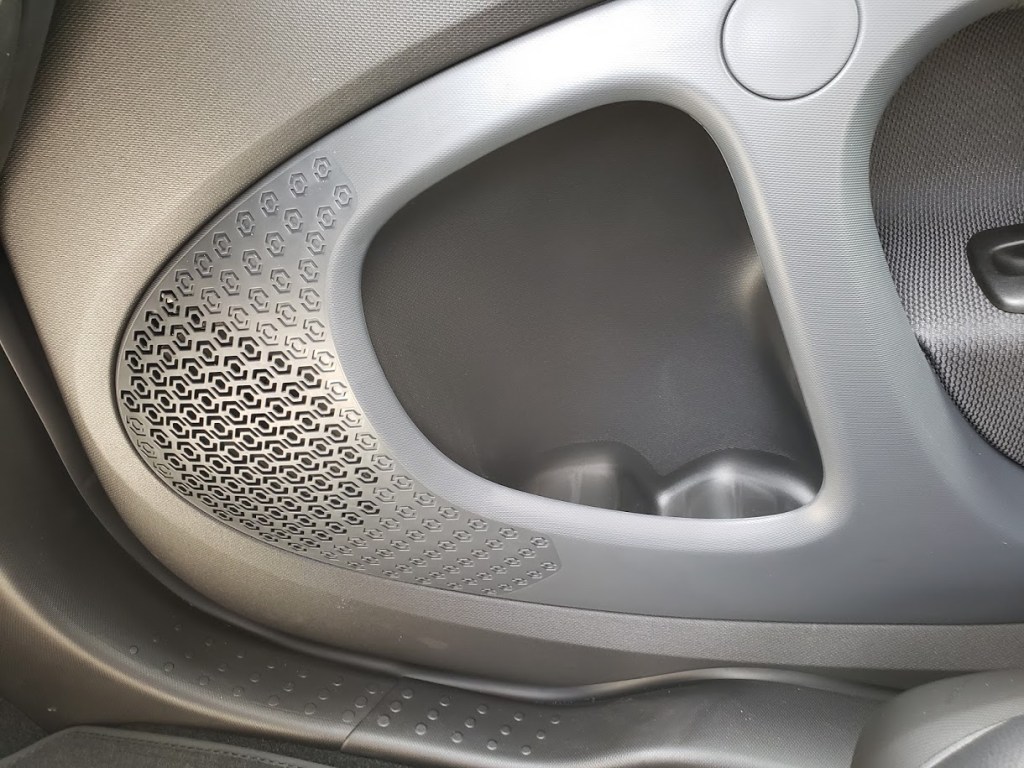
The Smart Fortwo features hexagon tessellations in its interior design (air vents, speaker grilles, panel geometry).
We used this signature shape as a foundation for the VisionNext interface, incorporating it into:
- Icon styles
- Button shapes
- Background patterns
- Animation motifs
This design approach created a visual bridge between the digital UI and the physical vehicle environment.
Design Process
1. Concept Exploration
Working jointly with Samsung and Harman designers, we explored multiple conceptual directions for the design, including:
- Different screen shapes and sizes
- Multiple color palettes and typography
- Geometry-driven layouts inspired by Smart Fortwo interiors
We iterated quickly through sketches and collaborative Figma frames to evaluate information architecture and layout options.
2. Wireframing & Interaction Design
I collaborated on the creation of wireframes that mapped:
- Core experience flows
- Navigation structure
- Media, navigation, and climate controls
- Animation points for transitions and states
Wireframes were tested internally with engineers to ensure feasibility within the prototype hardware.
3. Visual Design & Branding
I partnered with the design team to establish the VisionNext visual identity, including:
- Logos and Iconography, incorporating hexagonal elements
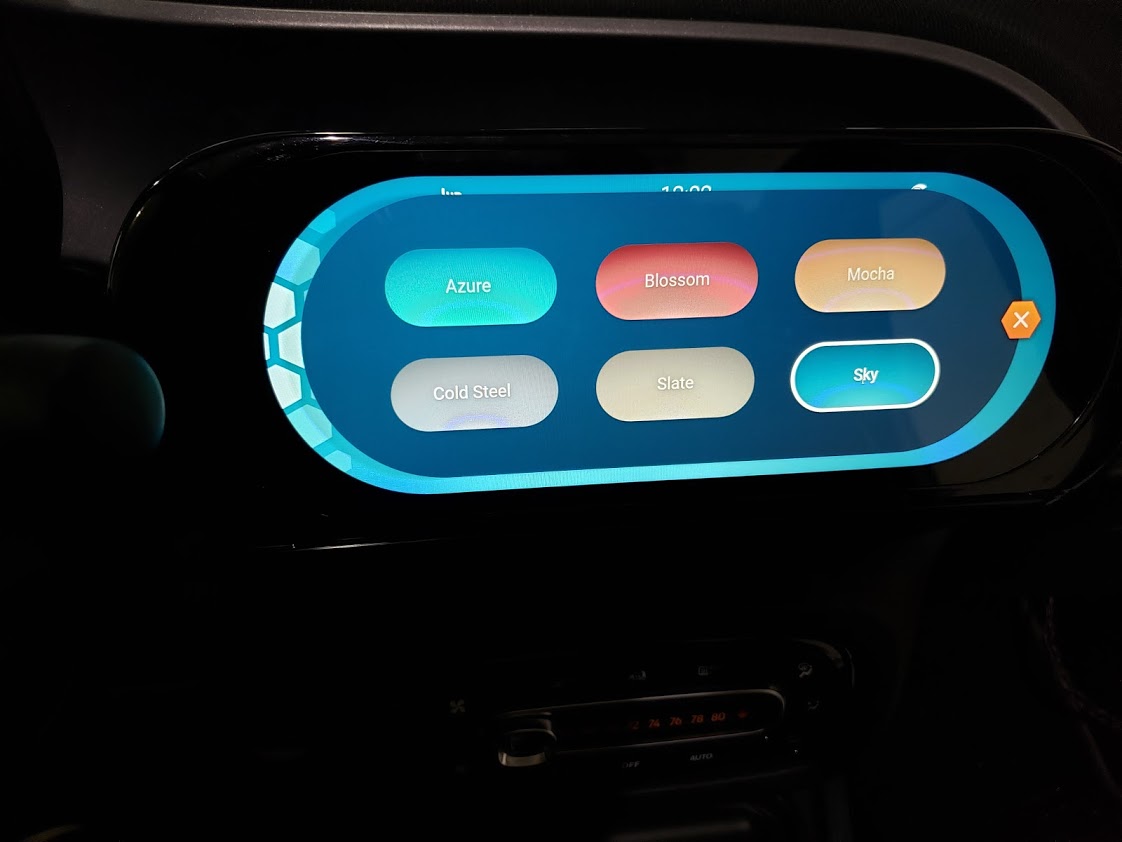
- Color palettes that felt fun and matched the energy of the Smart Fortwo
- UI layout patterns informed by the vehicle’s interior
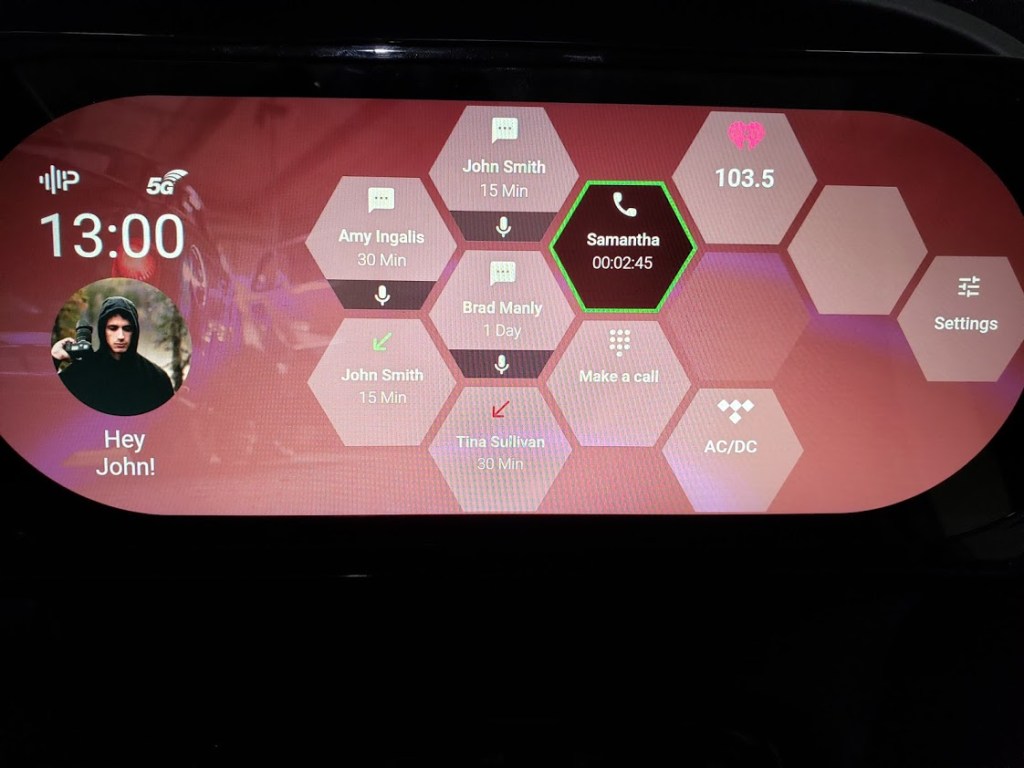
We used Figma to create high-fidelity UI screens that would be displayed on the CES prototype hardware.
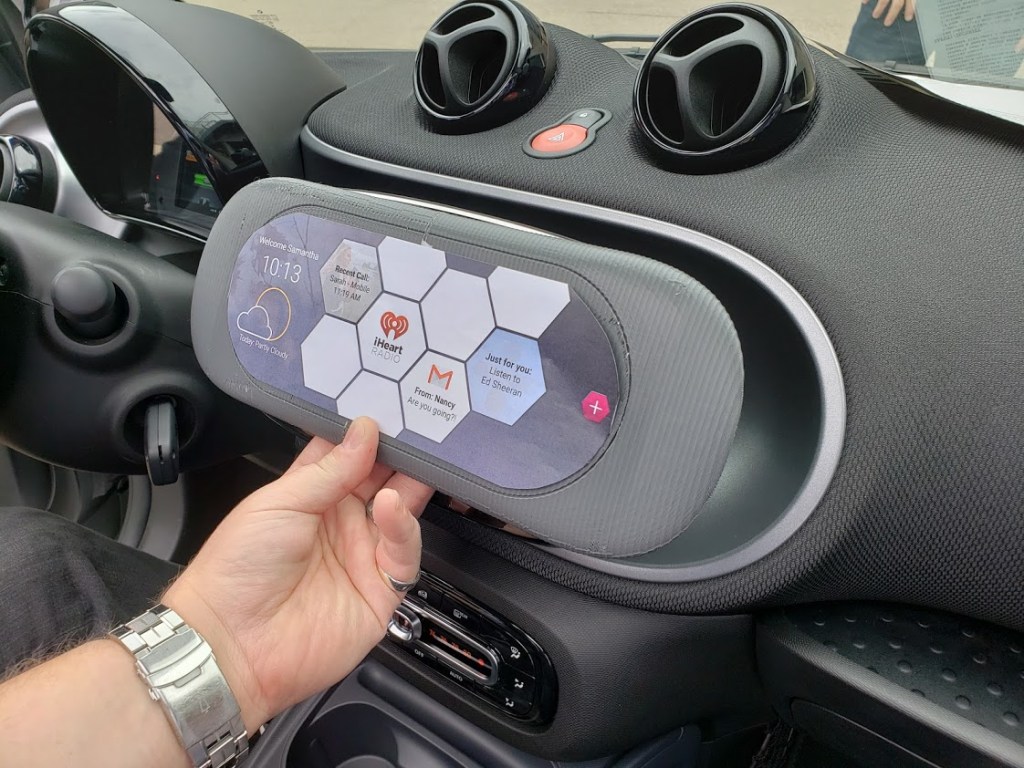
4. 3D Prototyping
Using a 3D printer, we collaborated with engineers to fabricate physical parts for the prototype, which was then professionally manufactured by Samsung.
This allowed us to test screen ergonomics and integration with the Smart Fortwo cabin frame.
5. Engineer Collaboration
Because the CES prototype had to function in real time, the design team worked closely with engineering to:
- Validate screen resolutions and aspect ratios for the rounded interface and screen
- Fit UI designs into the physical hardware constraints
- Adjust animations for smoothness on prototype hardware
- Conduct rapid rounds of design tweaks as functionality evolved
Hardware, software, design, and fabrication cycles ran simultaneously, requiring continuous communication.
Key Features
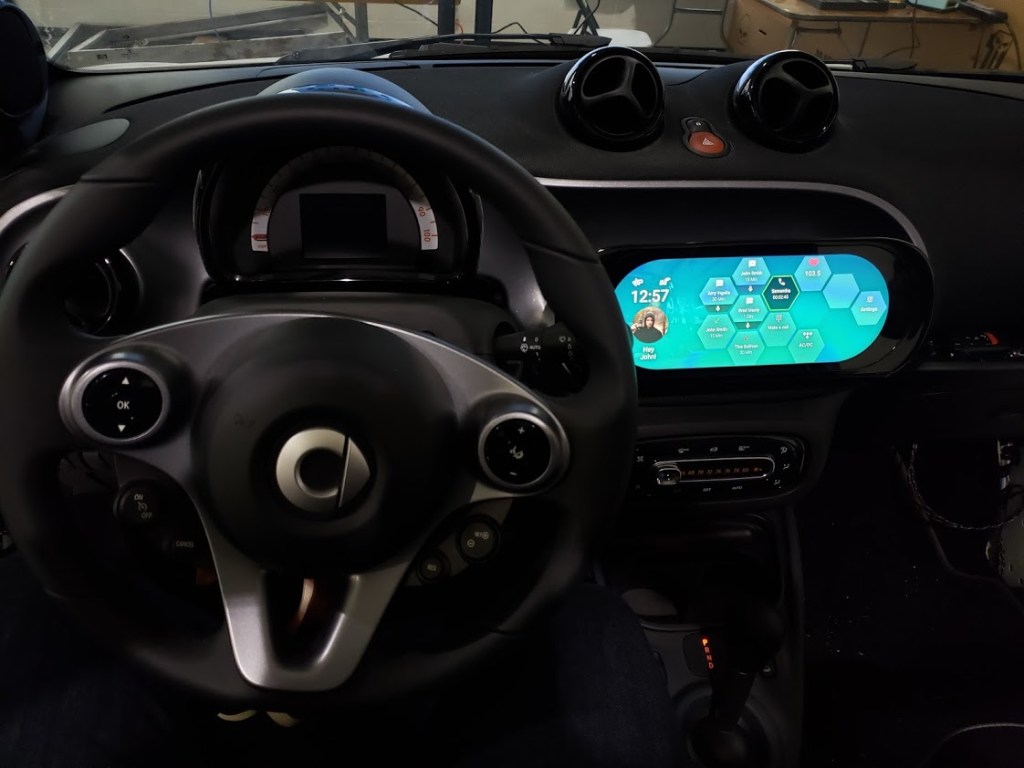
- Hexagon-inspired UI components tied to the Smart Fortwo interior
- Modern visual language aligned with Harman and Samsung’s connected mobility vision
- Custom branding (including logos and icon sets) and multiple color themes
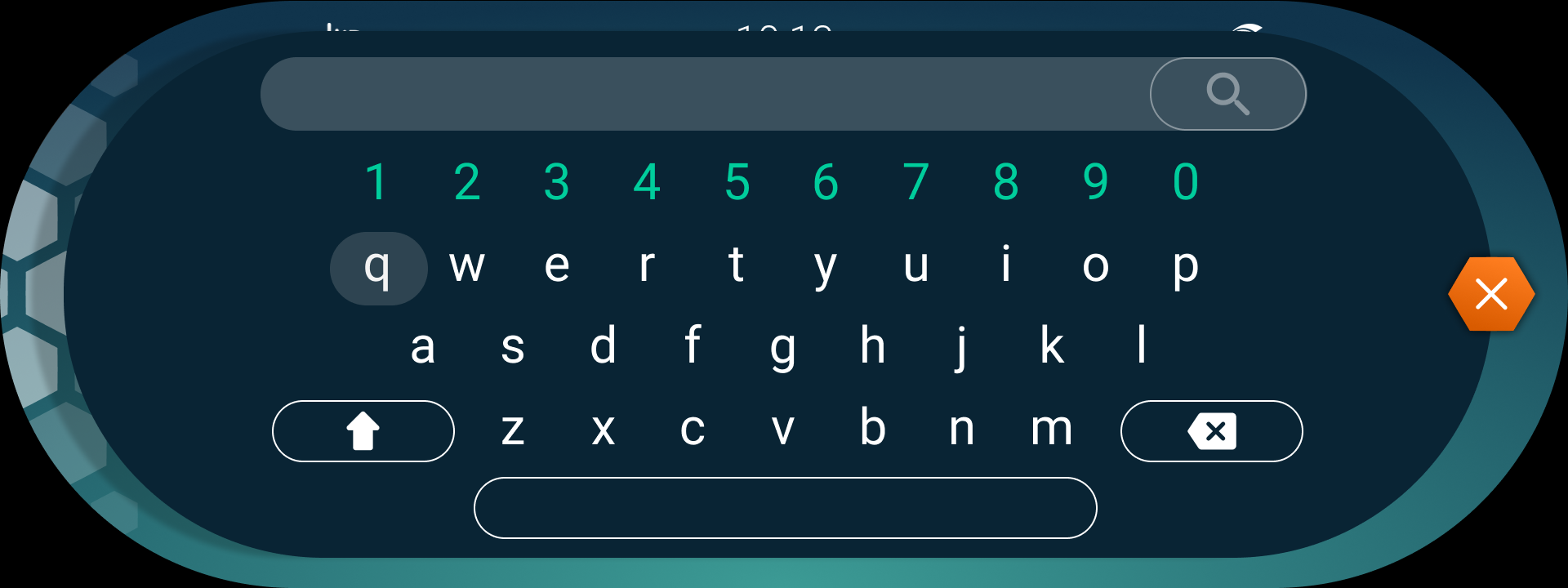
- Touch-friendly navigation optimized for CES demonstration
- Real-time prototype displayed live at CES 2020
Outcome & Impact
- Successfully launched at CES 2020, drawing attention from attendees, media, and industry partners
- Delivered a cohesive UI that merged physical and digital design
- Demonstrated the collaboration strengths between Samsung and Harman
- Highlighted the potential direction for Smart Fortwo infotainment
- Strengthened internal design/engineering workflows for future concept prototypes
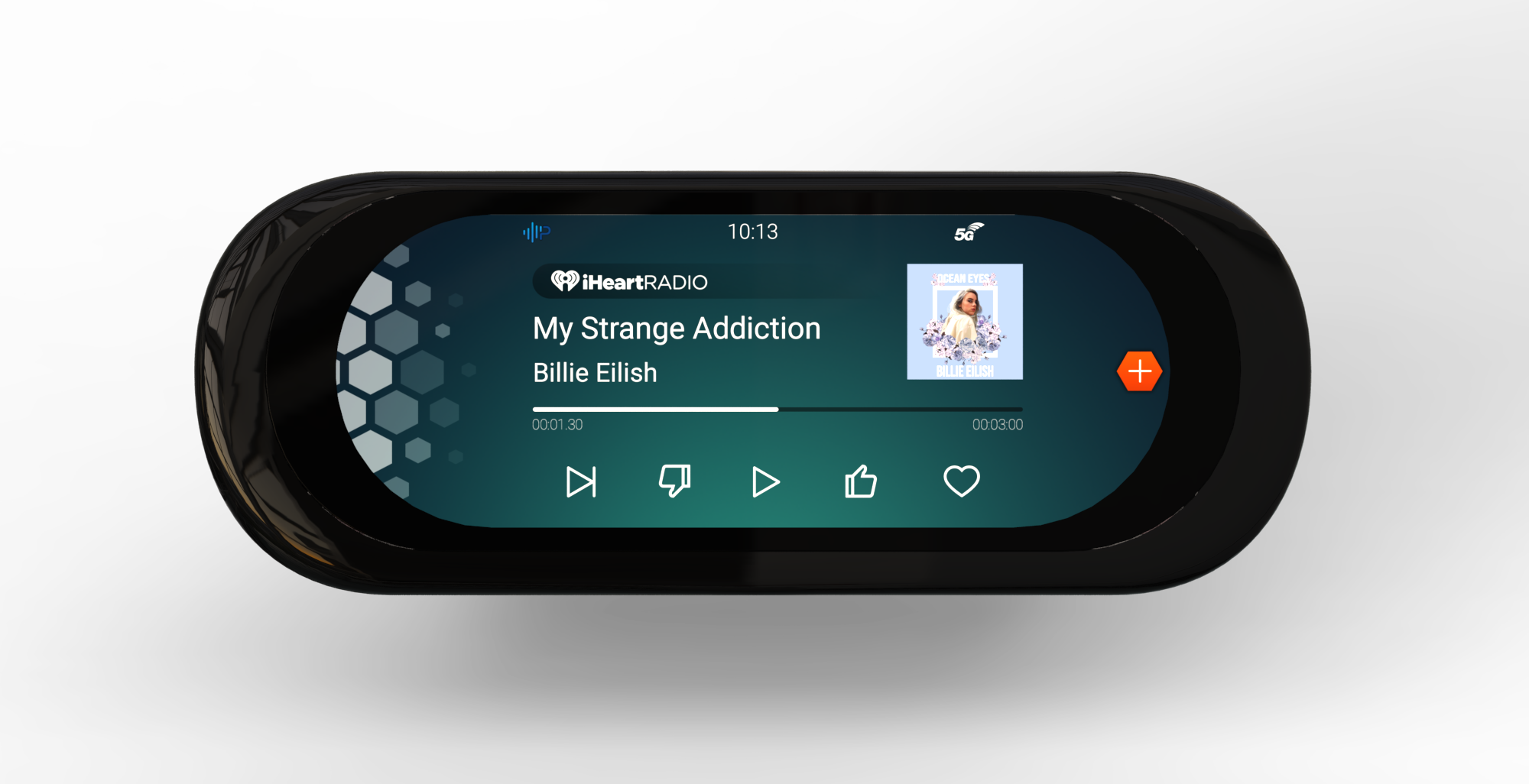
The VisionNext system delivers both innovative design and functional real-time interaction.
Key Takeaways
- Designing for CES requires rapid iteration, bold visuals, and tight engineering alignment
- Integrating vehicle styling cues (like the Smart Fortwo hexagon forms) creates authentic and immersive infotainment designs
- Collaboration across Samsung, Harman, engineers, and 3D fabricators was essential to achieving a high-fidelity final prototype
- Figma’s collaborative features were crucial for handling the fast-paced, multi-team workflow
 Tara Wilkinson UX/UI Portfolio